
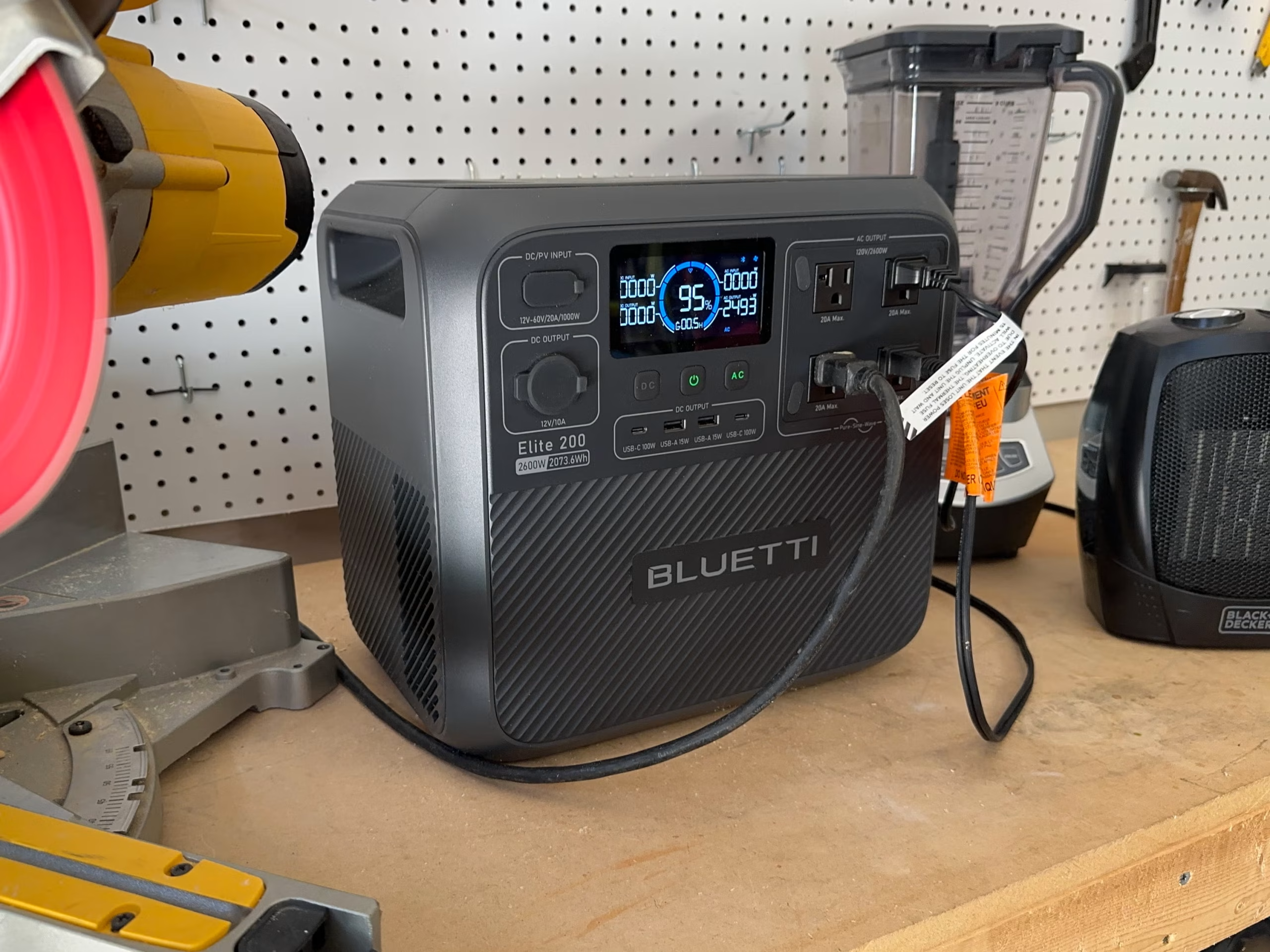
Not every outage requires whole-home backup. Sometimes the priority is simpler: keep food cold, internet working, lights on, and critical devices powered. Home battery storage can be well suited to that kind of essential-load plan.
Essential Loads Are Usually Manageable
Refrigerators, routers, LED lights, phone chargers, and many medical devices use far less power than central air or electric dryers. That means a properly sized battery may support them for meaningful periods. The exact runtime depends on device power, battery capacity, and reserve settings.
Medical Needs Require Extra Care
If a household depends on medical equipment, the battery plan should be conservative. Runtime estimates, backup reserve, service support, and a secondary emergency plan all matter. Local emergency planning guidance often encourages households with medical needs to plan ahead rather than improvise during an outage.
Smart Load Selection Extends Runtime
A home battery backup solutions plan can keep essential circuits active while blocking flexible loads. The goal is not to make the home feel normal in every way. It is to preserve the functions that keep people safe and comfortable.
Internet Backup Is More Than the Router
The router needs power, but local internet infrastructure also has to remain operational. A battery can keep home equipment on, but it cannot guarantee the provider’s network stays online. Cellular backup may be useful for households that depend on connectivity.
Ask for a Circuit List
The proposal should specify which outlets and devices are backed up. Homeowners comparing Sigenergy products should avoid vague language and request a practical outage map of what will work.
A practical proposal should also include a plain-language operating scenario. What happens on a normal weekday, during a high-price evening, and when the grid fails after sunset? Those examples reveal more than a spec sheet because they show how the battery, loads, and controls behave together.
The homeowner should ask for assumptions in writing: usable battery capacity, supported loads, solar behavior if applicable, reserve settings, rate-plan logic, and incentive assumptions. According to NREL, installed storage costs depend on configuration and site conditions, so transparency is part of good design.
It is also smart to compare the battery with other home upgrades. Better insulation, a more efficient HVAC system, smarter EV charging, or a revised utility plan can change the amount of storage needed. Batteries work best as part of a whole-home energy plan.
The final check is usability. A system that requires constant attention will eventually be ignored. A good home battery setup should make daily energy decisions visible, adjustable, and calm enough that the household can trust it during both ordinary evenings and stressful outages.
Local context matters as much as hardware. Utility tariffs, outage history, climate, solar access, and household routines can make the same battery feel valuable in one home and unnecessary in another. That is why a quote should be based on actual usage data whenever possible.
The installer should also explain what happens as the home changes. A second EV, a heat pump, an induction range, or a new time-of-use plan can shift the load profile. Expandability, app controls, and clear operating modes help the system stay useful after the first year.
Finally, the homeowner should avoid comparing only headline capacity. Usable capacity, output rating, backup transfer behavior, load control, warranty terms, and monitoring all affect real performance. Those details determine whether stored energy becomes a reliable household tool or just an expensive reserve.
A careful homeowner can also ask for a simple one-page summary before signing. It should list the backed-up loads, expected runtime range, battery reserve settings, installation assumptions, and what is excluded from the quote. That document helps prevent confusion later, especially when the project includes utility paperwork, electrical upgrades, or future solar and EV plans.
If the proposal includes savings estimates, the inputs should be visible. Peak prices, off-peak prices, export credits, demand charges, and expected cycling all affect the result. Clear assumptions make it easier to decide whether the battery is being purchased for financial return, outage comfort, or a mix of both.
That clarity is worth asking for before equipment is ordered.
Essential-load backup is often the most efficient way to turn home battery storage into real outage resilience.